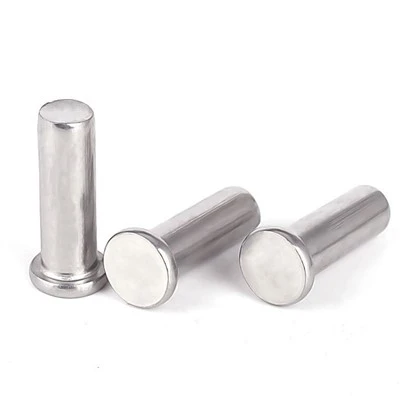
Flash is an inevitable by – product in the cold forging process of fasteners. As a seasoned supplier of cold – forged fasteners, I understand the challenges and implications that flash brings to the quality and performance of our products. In this blog, I will share some effective methods to control and remove the flash of cold – forged fasteners. Cold Forged Fasteners
Understanding the Flash in Cold – Forged Fasteners
Before delving into the control and removal methods, it’s crucial to understand what flash is and how it forms. Flash is the excess metal that flows out of the die cavity during the cold forging process. It occurs due to the pressure applied on the metal billet, causing the metal to escape along the parting line of the die.
There are two main types of flash in cold – forged fasteners: horizontal flash and vertical flash. Horizontal flash forms along the parting plane of the die, while vertical flash may occur at the end or the side of the fastener depending on the die design and forging operation.
Although flash can provide some benefits, such as preventing the under – filling of the die cavity and helping to distribute the forging pressure evenly, it can also cause several problems. Excessive flash can lead to increased material consumption, higher machining costs, and potential quality issues. For example, if the flash is not properly removed, it may affect the dimensional accuracy of the fastener and cause problems during assembly.
Controlling the Flash Formation
Die Design Optimization
One of the most effective ways to control flash formation is through die design. A well – designed die can minimize the amount of flash produced during the cold forging process.
First, the die cavity should be designed to match the shape and size of the fastener precisely. Any unnecessary clearance or mismatch between the billet and the die cavity can lead to excessive flash. By optimizing the die cavity design, we can ensure that the metal flows into the desired areas without overflowing.
Second, the parting line of the die should be carefully selected. The parting line is the interface between the two halves of the die, and it plays a crucial role in flash formation. A proper parting line should be located in an area where the flash can be easily removed and where it has the least impact on the final product quality. For example, in some cases, a horizontal parting line may be more suitable than a vertical one, depending on the shape of the fastener.
Third, the use of flash gutters in the die design can also help to control flash. Flash gutters are channels or grooves in the die that are designed to collect the excess metal. By providing a path for the flash to flow into the gutters, we can prevent the flash from spreading over the surface of the fastener and causing quality issues.
Billet Size and Shape Control
The size and shape of the billet used in the cold forging process also have a significant impact on flash formation. If the billet is too large, it will generate more flash as the excess metal has nowhere else to go but out of the die cavity. On the other hand, if the billet is too small, it may result in under – filling of the die and incomplete forging.
To control the billet size, we need to accurately calculate the volume of metal required for the forging process. This calculation should take into account the final shape and size of the fastener, as well as the expected amount of flash. By using precise cutting and weighing methods, we can ensure that the billet size is within the acceptable range.
In addition to size, the shape of the billet is also important. A billet with a proper shape can help the metal to flow more evenly into the die cavity, reducing the likelihood of flash formation. For example, for some complex – shaped fasteners, pre – forming the billet into a specific shape before cold forging can improve the metal flow and minimize flash.
Forging Process Parameter Adjustment
The forging process parameters, such as forging force, forging speed, and temperature, can also affect flash formation.
The forging force should be carefully controlled. If the forging force is too high, it will cause more metal to flow out of the die cavity, resulting in excessive flash. On the other hand, if the forging force is too low, the fastener may not be fully formed, leading to quality issues. By optimizing the forging force based on the material properties of the billet and the design of the die, we can achieve a good balance between forging quality and flash control.
The forging speed also plays a role in flash formation. A high forging speed can cause the metal to flow more rapidly, increasing the likelihood of flash. Therefore, it is necessary to select an appropriate forging speed to ensure a stable metal flow and minimize flash.
Although cold forging is carried out at room temperature, the temperature of the billet and the die can still have an impact on the forging process. A slightly elevated temperature can improve the ductility of the metal, making it easier to flow into the die cavity. However, if the temperature is too high, it may cause the metal to become too soft and generate more flash. Therefore, it is important to maintain a proper temperature during the cold forging process.
Removing the Flash
Mechanical Removal Methods
Mechanical removal methods are the most commonly used techniques for flash removal in cold – forged fasteners.
One of the simplest mechanical removal methods is grinding. Grinding involves using a grinding wheel or abrasive belt to remove the flash from the surface of the fastener. This method is suitable for removing small amounts of flash and can provide a smooth surface finish. However, grinding can be a time – consuming process, especially for large – scale production.
Another mechanical removal method is trimming. Trimming is usually carried out using a trimming die or a press. The fastener is placed in the trimming die, and a press is used to cut off the flash along the parting line. Trimming is a fast and efficient method for removing flash, but it requires a precise trimming die to ensure that the flash is removed cleanly without damaging the fastener.
Shot blasting is also a popular mechanical removal method. In shot blasting, small metal or ceramic particles are propelled at high speed onto the surface of the fastener. The impact of the particles can remove the flash and also improve the surface finish of the fastener. Shot blasting is suitable for removing flash from complex – shaped fasteners and can be used for mass production.
Chemical Removal Methods
Chemical removal methods can also be used to remove flash from cold – forged fasteners. Chemical etching is one such method. In chemical etching, the fasteners are immersed in a chemical solution that reacts with the flash, causing it to dissolve.
Chemical etching can be very effective in removing flash from small and intricate fasteners. It can also reach areas that are difficult to access by mechanical methods. However, chemical etching requires careful control of the chemical solution and the etching time to avoid over – etching and damaging the fastener. Additionally, proper safety measures need to be taken when handling the chemical solutions.
Thermal Removal Methods
Thermal removal methods involve using heat to remove the flash. One thermal removal method is burning. In this process, the flash is heated to a high temperature until it burns off. However, burning can be difficult to control and may cause discoloration or damage to the fastener if not properly carried out.
Another thermal removal method is laser cutting. Laser cutting uses a high – energy laser beam to cut off the flash. Laser cutting is a precise and fast method, especially suitable for removing small amounts of flash from high – precision fasteners. However, the equipment cost for laser cutting is relatively high.
Quality Control in Flash Removal
After controlling and removing the flash, it is essential to conduct quality control to ensure that the fasteners meet the required standards.
Visual inspection is the most basic quality control method. By visually examining the fasteners, we can check if there is any remaining flash, scratches, or other surface defects. The inspection should be carried out under proper lighting conditions, and trained inspectors should be able to identify even the smallest defects.
Dimensional measurement is also crucial. Flash removal may sometimes affect the dimensional accuracy of the fastener. Therefore, we need to use precision measuring tools, such as micrometers and calipers, to measure the key dimensions of the fastener and ensure that they are within the specified tolerance range.
In addition to visual inspection and dimensional measurement, non – destructive testing methods, such as ultrasonic testing and magnetic particle testing, can be used to detect any internal defects that may be caused by the flash or the flash removal process.
Conclusion
Controlling and removing the flash of cold – forged fasteners is a complex but essential process in ensuring the quality and performance of our products. By optimizing die design, controlling billet size and shape, adjusting forging process parameters, and using appropriate flash removal methods, we can minimize the impact of flash on our fasteners.
Rivet At our company, we are committed to providing high – quality cold – forged fasteners by implementing these advanced techniques for flash control and removal. If you are in the market for cold – forged fasteners or have any questions about our products, we encourage you to reach out to our sales team for further discussion and potential procurement opportunities. We look forward to working with you to meet your specific fastener requirements.
References
- Smith, J. (2018). Cold Forging Technology: Principles and Applications. London: Elsevier.
- Johnson, R. (2019). Metal Forming Processes and Die Design. New York: Wiley.
- Brown, M. (2020). Quality Control in Fastener Manufacturing. Chicago: Fastener Quality Institute Publications.
Wuyuan Jieyi Automotive Electrical Appliance Co., Ltd.
As one of the most professional cold forged fasteners manufacturers and suppliers in China, we’re featured by quality products and good service. Please rest assured to wholesale bulk durable cold forged fasteners in stock here from our factory. We also accept customized orders.
Address: No. 7 Likeng Road, Industrial Park Wuyuan County, Shangrao City, Jiangxi Province
E-mail: wyjydqz@163.com
WebSite: https://www.wyjydq.com/
