Hey there! I’m a supplier of induction furnaces, and today I wanna chat about the alloying process in an induction furnace. It’s a super interesting topic that’s crucial in a bunch of industries, from manufacturing to metallurgy. So, let’s dive right in! Induction Furnace
What’s an Induction Furnace Anyway?
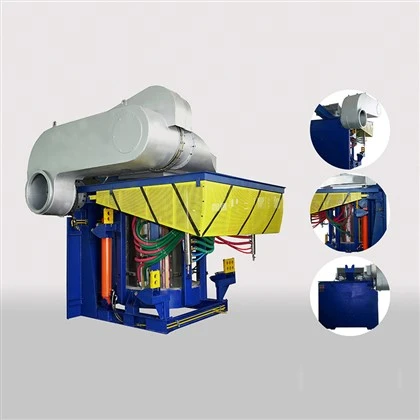
Before we get into the alloying process, let me quickly explain what an induction furnace is. It’s a type of furnace that uses electromagnetic induction to heat and melt metals. It’s got a coil that’s connected to an alternating current power source. When the current flows through the coil, it creates a magnetic field. This magnetic field then induces electrical currents in the metal inside the furnace, which heats it up. This method is really efficient and can heat metals super fast.
The Basics of Alloying
Alloying is the process of mixing two or more metals, or a metal and a non – metal, to create an alloy. Alloys are way better than pure metals in a lot of ways. They can have improved strength, hardness, corrosion resistance, and other properties. For example, steel is an alloy of iron and carbon. Adding carbon to iron makes it stronger and harder, which is why it’s used in so many construction projects and manufacturing processes.
How Alloying Happens in an Induction Furnace
The alloying process in an induction furnace starts with the selection of the base metal. This is usually the metal that makes up the largest part of the alloy. For instance, if you’re making a copper – based alloy, copper will be the base metal. The base metal is loaded into the induction furnace.
Once the base metal is in the furnace, the power is turned on, and the electromagnetic field starts to heat it up. As the base metal starts to melt, it forms a molten pool. This is where the magic of alloying really begins.
Next, the alloying elements are added to the molten pool. These elements can be in the form of pure metals, pre – alloys, or even compounds. The choice of alloying elements depends on the properties you want the final alloy to have. For example, if you want to increase the strength of a steel alloy, you might add elements like manganese, chromium, or nickel.
It’s really important to add the alloying elements at the right time and in the right amount. Adding them too early or too late can affect the quality of the alloy. And adding the wrong amount can also mess things up. So, you gotta be really precise.
The induction furnace helps a lot with this. The electromagnetic stirring effect in the furnace makes sure that the alloying elements get evenly distributed in the molten metal. This uniform distribution is crucial for getting a high – quality alloy. The stirring helps to break up any clumps of alloying elements and ensures that they react with the base metal properly.
Factors Affecting the Alloying Process
There are several factors that can affect the alloying process in an induction furnace.
Temperature
Temperature is a biggie. If the temperature is too low, the alloying elements might not dissolve properly in the molten metal. This can lead to uneven distribution and defects in the final alloy. On the other hand, if the temperature is too high, it can cause excessive evaporation of some of the alloying elements. This not only changes the composition of the alloy but can also be a waste of resources.
Mixing Time
The length of time the alloying elements are mixed in the molten metal also matters. You need to give them enough time to fully dissolve and react with the base metal, but not too much time that the metal starts to oxidize or other unwanted reactions occur.
Furnace Atmosphere
The atmosphere inside the furnace can have a significant impact on the alloying process. If there’s too much oxygen in the furnace, it can cause oxidation of the metal and the alloying elements. This can form oxides, which can affect the properties of the alloy. That’s why some induction furnaces are operated in a controlled atmosphere, like an inert gas environment, to prevent oxidation.
Advantages of Using an Induction Furnace for Alloying
There are quite a few reasons why using an induction furnace for alloying is a great idea.
Efficiency
Induction furnaces are really efficient at heating metals. They can reach high temperatures quickly, which means less time is needed to melt the base metal and complete the alloying process. This saves energy and also increases productivity.
Precise Control
You can have a high level of control over the alloying process in an induction furnace. You can control the temperature, the stirring speed, and the addition of alloying elements very precisely. This allows you to produce alloys with consistent and predictable properties.
Clean Process
Compared to some other types of furnaces, induction furnaces are relatively clean. There’s less pollution and fewer emissions during the alloying process. This is not only better for the environment but also helps to produce a higher – quality alloy.
Applications of Alloys Made in Induction Furnaces
The alloys produced in induction furnaces are used in a wide range of industries.
In the automotive industry, alloys are used to make engine parts, chassis components, and body panels. These alloys need to be strong, lightweight, and corrosion – resistant. Induction – furnace – made alloys can meet these requirements.
The aerospace industry also relies heavily on alloys made in induction furnaces. Parts like turbine blades, aircraft frames, and landing gears need to withstand extreme conditions, such as high temperatures and high stress. The precise control over the alloying process in an induction furnace allows for the production of alloys with the exact properties needed for these applications.
In the manufacturing of electronics, alloys are used for components like connectors and circuit boards. These alloys need to have good electrical conductivity and stability. Induction – furnace – based alloying can produce alloys with these specific characteristics.
Conclusion
In a nutshell, the alloying process in an induction furnace is a complex but really important procedure. It allows us to create alloys with a wide range of properties that are used in many different industries. The efficiency, precise control, and cleanliness of induction furnaces make them a great choice for alloying.

If you’re in the market for an induction furnace for your alloying needs, or if you just wanna learn more about our products, don’t hesitate to reach out. We’ve got a team of experts who can help you find the right furnace for your specific requirements. Whether you’re a small – scale workshop or a large – scale manufacturing plant, we’ve got solutions for you.
Parts Of Induction Furnace References:
- "Metallurgy: Principles and Applications" – A comprehensive book on the science of metals and alloying.
- Industry magazines and journals on foundry technology and metal processing.
Xi’an Aobang Technology Co., Ltd.
As one of the most professional induction furnace manufacturers and suppliers in China, we’re featured by quality products and good price. Welcome to buy durable induction furnace for sale here and get quotation from our factory. Customized orders are welcome.
Address: No.268, Caotan 6th Road, Economical and Technological Development Zone, Xi’an, Shaanxi, China.
E-mail: alicezhang@xaabfurnace.com
WebSite: https://www.xaabfurnace.com/
