Hey there! I’m a supplier of Cummins pistons, and I’ve been in this business for quite a while. Today, I wanna talk about how a Cummins piston interacts with the cylinder wall. It’s a pretty cool topic, and it’s something that’s crucial for the performance and longevity of an engine. Cummins Piston
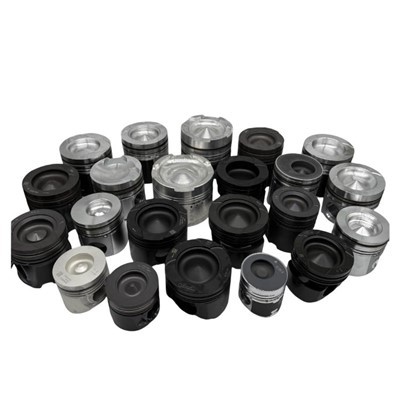
Let’s start with the basics. The piston is like the heart of the engine. It moves up and down inside the cylinder, and this movement is what creates the power that makes your vehicle go. When the piston moves up, it compresses the air – fuel mixture in the combustion chamber. Then, when the spark plug ignites the mixture, it explodes, pushing the piston back down. This up – and – down motion is transferred to the crankshaft, which then turns the wheels of your vehicle.
Now, let’s get into how the piston interacts with the cylinder wall. First off, there’s a thin layer of oil between the piston and the cylinder wall. This oil is super important. It acts as a lubricant, reducing friction between the two surfaces. Without this lubrication, the piston and the cylinder wall would rub against each other, causing a lot of wear and tear. The oil also helps to seal the combustion chamber. It fills in the tiny gaps between the piston and the cylinder wall, preventing the hot gases from leaking out during the combustion process.
The shape of the piston also plays a big role in its interaction with the cylinder wall. Cummins pistons are designed with a specific shape to ensure a proper fit inside the cylinder. They’re usually slightly oval – shaped when they’re cold. This is because as the engine heats up, the piston expands. The oval shape allows for this expansion, so that when the engine is at operating temperature, the piston fits snugly against the cylinder wall.
Another important aspect is the piston rings. These are small, circular pieces of metal that fit around the piston. There are usually two or three piston rings on a Cummins piston. The top ring, known as the compression ring, is responsible for sealing the combustion chamber. It prevents the high – pressure gases from leaking past the piston and into the crankcase. The second ring, called the intermediate ring, also helps with sealing and oil control. The bottom ring, the oil control ring, is designed to scrape excess oil off the cylinder wall and return it to the oil pan.
The material of the piston is also a key factor. Cummins pistons are typically made from high – quality aluminum alloys. These alloys are lightweight, which helps to reduce the overall weight of the engine and improve fuel efficiency. They also have good thermal conductivity, which means they can dissipate heat quickly. This is important because the piston gets very hot during the combustion process. If it can’t get rid of the heat fast enough, it can cause problems like piston seizure.
Now, let’s talk about some of the challenges that can occur in the interaction between the piston and the cylinder wall. One of the biggest issues is wear. Over time, the constant movement of the piston against the cylinder wall can cause the surfaces to wear down. This can lead to increased clearances between the piston and the cylinder wall, which can result in poor engine performance, increased oil consumption, and even engine failure.
Another problem is carbon buildup. When the air – fuel mixture doesn’t burn completely, carbon deposits can form on the piston and the cylinder wall. These deposits can interfere with the proper functioning of the piston rings and increase friction. To prevent this, it’s important to use high – quality fuels and perform regular engine maintenance.
As a supplier of Cummins pistons, we take great care in ensuring that our pistons are of the highest quality. We use advanced manufacturing techniques and strict quality control measures to make sure that each piston meets the exact specifications of Cummins engines. We also offer a wide range of piston options to suit different engine models and applications.
If you’re in the market for Cummins pistons, or if you have any questions about how they interact with the cylinder wall, don’t hesitate to reach out. We’re here to help you get the best performance out of your engine. Whether you’re a mechanic, an engine builder, or just someone who wants to keep their vehicle running smoothly, we’ve got the pistons you need.

So, if you’re interested in purchasing Cummins pistons, feel free to contact us for more information. We’re always happy to have a chat and discuss your specific needs. Let’s work together to keep your engines running at their best!
Weichai Piston References:
- Engine Technology Handbook, Second Edition by Colin R. Ferguson and Andrew P. Kirkpatrick
- Automotive Mechanics, 6th Edition by James D. Halderman
Hebei Yuwei Piston Co., Ltd.
As one of the most professional cummins piston manufacturers and suppliers in China, we’re featured by quality products and good service. Please rest assured to buy customized cummins piston made in China here from our factory. Also, quotation is available.
Address: Beizhujiacun Village, Sujiuzhuang Town, Ningjin County, Xingtai City, Hebei Province
E-mail: 13932997114@163.com
WebSite: https://www.ywpiston.com/
