Hey there! I’m from a Vacuum System supplier, and today I want to chat with you about the materials used for a vacuum chamber in a vacuum system. Vacuum System
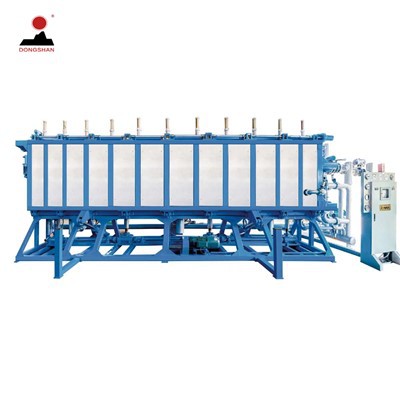
First off, let’s understand why the choice of materials for a vacuum chamber is super important. A vacuum chamber is the heart of a vacuum system, where all the cool stuff happens under low – pressure conditions. You need materials that can handle the vacuum environment without causing contamination, outgassing, or even structural failure.
Stainless Steel
One of the most common materials we use for vacuum chambers is stainless steel. And there’s a good reason for it. Stainless steel has excellent corrosion resistance. This means it can withstand different types of gases and chemicals that might be present in the vacuum process. Whether you’re doing a chemical vapor deposition or just a simple vacuum drying, stainless steel won’t rust or corrode easily.
It also has low outgassing properties. Outgassing is when a material releases gases when placed in a vacuum. This can mess up the vacuum level you’re trying to achieve. Stainless steel doesn’t outgas much, so it helps maintain a stable vacuum environment.
Another great thing about stainless steel is its strength. It can handle the pressure difference between the vacuum inside the chamber and the atmosphere outside. You can build large – sized chambers with stainless steel without having to worry too much about the chamber collapsing or deforming under stress.
We usually use different grades of stainless steel depending on the application. For example, 304 stainless steel is quite popular. It’s relatively easy to machine and weld, which makes it a cost – effective option for many general – purpose vacuum chambers. If you need something more corrosion – resistant, like when dealing with harsh chemicals, we might go for 316 stainless steel.
Aluminum
Aluminum is another material we often turn to. It’s much lighter than stainless steel. If you need to move your vacuum system around a lot or if you’re designing a portable system, aluminum is a great choice. It’s easy to work with too. You can machine aluminum into complex shapes relatively quickly and at a lower cost compared to stainless steel.
Aluminum also has good thermal conductivity. This can be a big advantage in some vacuum processes. For instance, if you need to heat or cool the contents of the chamber quickly, the high thermal conductivity of aluminum helps transfer heat efficiently.
However, aluminum does have some drawbacks. It’s not as strong as stainless steel. So, for high – pressure differentials or large – scale applications, you might need to reinforce the aluminum chamber. Also, it can form an oxide layer relatively quickly when exposed to air. But this can be managed through proper surface treatment.
Glass
Glass is used in some vacuum chambers, especially in research – based applications or in setups where you need to visually observe the process inside the chamber. Glass is transparent, which allows you to see what’s going on without having to open the chamber.
There are different types of glass used. Borosilicate glass is a common one. It has good thermal shock resistance, which means it can withstand sudden temperature changes without cracking. This is important in vacuum processes where you might heat or cool the chamber rapidly.
But glass is brittle. It can break easily if it’s not handled carefully. And it’s not suitable for high – pressure applications. If you’re working with high – power processes or if there’s a risk of mechanical impact, glass might not be the best choice.
Titanium
Titanium is a high – end material for vacuum chambers. It has extremely high strength – to – weight ratio, which is great for applications where weight is a concern but you still need a strong chamber. Titanium is also very corrosion – resistant, even more so than stainless steel in some harsh environments.
It has low outgassing properties, similar to stainless steel. This makes it ideal for ultra – high – vacuum applications where maintaining a very clean and stable vacuum is crucial, such as in semiconductor manufacturing or space simulation chambers.
The downside is that titanium is expensive. Machining and welding titanium can be challenging and costly. So, we only use it when the application really demands its unique properties.
Copper
Copper is sometimes used in vacuum chambers, mainly because of its excellent thermal and electrical conductivity. In applications where you need to transfer heat or electricity efficiently, copper can be a great option. For example, in some vacuum furnaces or in systems where you’re doing electrical discharge machining in a vacuum, copper components can help with the heat and electrical transfer.
But copper is relatively soft compared to stainless steel and titanium. It can be easily deformed, and it also has a higher outgassing rate compared to some of the other materials. So, it’s usually used in combination with other materials or in specific parts of the chamber where its conductivity properties are more important.
Ceramics
Ceramics have their place in vacuum chambers too. They are great insulators, both thermally and electrically. In applications where you need to isolate different parts of the chamber electrically or thermally, ceramics can be used.
They also have good chemical resistance and low outgassing properties. Some advanced ceramics can handle very high temperatures, which is useful in high – temperature vacuum processes like in some types of heat – treatment chambers.
However, ceramics are brittle, like glass. They can crack under mechanical stress, and they can be difficult to machine into complex shapes.
When we’re designing a vacuum chamber for a customer, we take into account a whole bunch of factors. First, we look at the application. What kind of process is going to happen inside the chamber? Is it a chemical process, a physical deposition, or something else? This will determine the level of vacuum required and the type of environment the chamber needs to withstand.
We also consider the size of the chamber. If it’s a large – scale chamber, we need a strong material that can handle its own weight and the pressure difference. For smaller chambers, we might have more flexibility in choosing materials based on other factors like cost or ease of manufacturing.
Cost is always a factor. We want to provide our customers with a cost – effective solution. Sometimes, a less expensive material like aluminum can meet the requirements, while in other cases, the unique properties of a more expensive material like titanium are worth the investment.
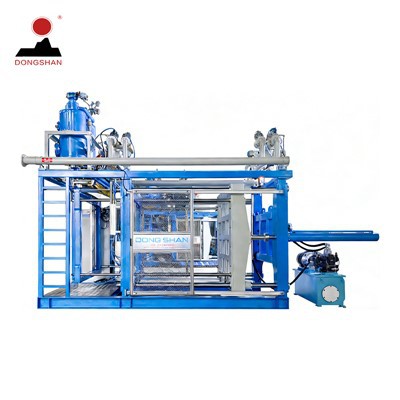
If you’re in the market for a vacuum system and you’re not sure what kind of material is best for your vacuum chamber, don’t worry. We’re here to help. Our team of experts can analyze your specific needs, take into account all the factors I’ve mentioned, and design a vacuum chamber that’s just right for you.
EPS Block Molding Machine Whether you’re in a research lab, a manufacturing plant, or any other industry that needs a vacuum system, we’ve got the knowledge and experience to provide you with a high – quality solution. So, if you’re interested in discussing your requirements or want to get a quote, just reach out to us. We’re more than happy to have a chat and see how we can help you with your vacuum system needs.
References
- "Vacuum Technology: Fundamentals and Applications" by John F. O’Hanlon
- "Handbook of Vacuum Physics" edited by D. W. Kayne
- "Materials Science for Engineers" by David Askeland and Pradeep Fulay
Hangzhou Fuyang Dongshan Plastic Machinery Co., Ltd.
Hangzhou Fuyang Dongshan Plastic Machinery Co., Ltd. is one of the most professional vacuum system manufacturers and suppliers in China, featured by quality products and low price. Please feel free to wholesale advanced vacuum system made in China here and get quotation from our factory. Customized orders are welcome.
Address: 101 Guanting, Baiqian Villige, Luzhu Town, Fuyang District, Hangzhou City, Zhejiang Province, China
E-mail: xu@dong-shan.cn
WebSite: https://www.epseppmachinery.com/
