Hey there! I’m a supplier of fluid couplings, and today I wanna talk about whether a fluid coupling can be used in a wet environment. This is a question I get asked a lot by my customers, so I thought I’d share my thoughts and insights on this topic. Fluid Coupling

First off, let’s quickly go over what a fluid coupling is. It’s a device that transfers rotational power from one shaft to another using hydraulic fluid. It’s commonly used in various industrial applications, like conveyor systems, pumps, and crushers, to name a few. The main advantage of a fluid coupling is that it can provide smooth start – up, protect the drivetrain from shock loads, and allow for some degree of slip between the input and output shafts.
Now, the big question: Can it work in a wet environment? The short answer is yes, but there are some important things to consider.
Advantages of Using Fluid Couplings in Wet Environments
One of the cool things about fluid couplings is their inherent design which can offer some resistance to water. The hydraulic fluid inside the coupling acts as a barrier to some extent. Since it’s sealed within the coupling housing, it can prevent water from easily seeping in and affecting the internal components.
In wet environments, like mines where there’s a lot of water spray or in paper mills where water is used in the production process, fluid couplings can still function. They’re able to handle a certain amount of moisture around them without immediately failing. This is great for industries that operate in such conditions because they don’t have to worry about constantly replacing their power – transmission devices due to water exposure.
Another advantage is that the smooth operation of a fluid coupling can be maintained even when there’s water around. Unlike some other mechanical coupling devices, fluid couplings don’t rely on direct mechanical contact for power transfer. This means that water isn’t likely to cause as much wear and tear on the coupling as it might on a coupling that depends on teeth or other mating parts.
Challenges of Using Fluid Couplings in Wet Environments
However, it’s not all roses. There are some significant challenges that come with using fluid couplings in a wet setting.
One of the main issues is corrosion. Water, especially if it’s contaminated with chemicals or has a high salt content, can cause the metal parts of the fluid coupling to corrode. The housing, the shafts, and any other metal components are at risk. Corrosion can weaken the structure of the coupling, leading to leaks and eventually, failure of the coupling.
The hydraulic fluid can also be affected by water. When water gets into the fluid, it can cause problems like emulsification. The water can mix with the hydraulic fluid, forming a milky – looking substance. This emulsified fluid loses its lubricating and hydraulic properties, which means the coupling won’t be able to transfer power as efficiently as it should. And if the fluid quality degrades too much, it can cause excessive wear on the internal components of the coupling.
Sealing is another major concern. The seals in a fluid coupling are designed to keep the hydraulic fluid inside and keep contaminants out. In a wet environment, the seals are constantly exposed to water and moisture. Over time, the water can degrade the rubber or other materials used in the seals, causing them to crack or lose their elasticity. Once the seals fail, water can enter the coupling, and that’s when all the problems mentioned above start to occur.
Solutions for Using Fluid Couplings in Wet Environments
So, how do we tackle these challenges? Well, there are a few solutions.
First, choosing the right materials is crucial. For the housing and other metal parts of the coupling, we can use corrosion – resistant materials like stainless steel. Stainless steel doesn’t corrode as easily as regular steel, so it can withstand the wet conditions much better. For the seals, we can use high – quality, water – resistant materials. Some special rubber compounds are designed to have excellent resistance to water and other chemicals.
Regular maintenance is also super important. You gotta check the seals regularly to make sure they’re in good condition. If you notice any signs of wear or damage, replace the seals immediately. You also need to check the hydraulic fluid regularly. There are tests you can do to check for water contamination. If the fluid is contaminated, you should drain and replace it as soon as possible.
In addition to that, some fluid couplings can be equipped with additional protective features. For example, there are splash guards and shields that can be added to the coupling to prevent water from directly hitting it. This can reduce the amount of water that the coupling is exposed to and extend its lifespan.
Real – World Examples
Let me share a few real – world examples. I have a customer who runs a food processing plant. In one area of the plant, there’s a lot of water used for cleaning the equipment. They were using a regular mechanical coupling, but it kept failing due to corrosion and water damage. After switching to a fluid coupling made of stainless steel and with high – quality seals, they’ve seen a significant improvement. The coupling has been running smoothly for a long time, and they haven’t had any major issues related to water exposure.
Another customer in a marine application was using a fluid coupling in a wet and salty environment. At first, they faced some problems with corrosion, but after implementing a strict maintenance schedule and using a corrosion – resistant coating on the coupling, they’ve managed to keep the coupling working well for years.
Conclusion
In conclusion, a fluid coupling can be used in a wet environment, but it comes with its own set of challenges. By choosing the right materials, doing regular maintenance, and adding some protective features, you can make it work effectively and reliably in such conditions.
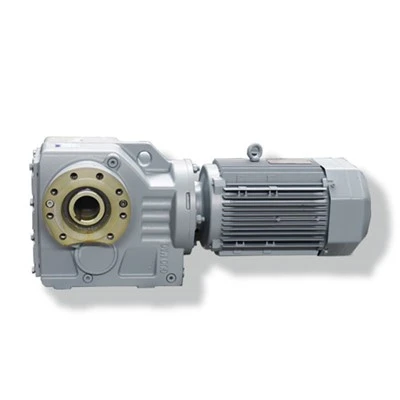
If you’re in an industry that operates in a wet environment and you’re looking for a power – transmission solution, a fluid coupling could be a great option for you. I’ve got a wide range of fluid couplings that are designed to handle different levels of moisture and harsh conditions. Whether you need a small coupling for a light – duty application or a large one for heavy machinery, I can help you find the right one.
Customized Gearbox If you’re interested in learning more about our fluid couplings or want to discuss your specific requirements, don’t hesitate to reach out. I’m here to answer all your questions and help you make the best decision for your business.
References
- "Industrial Power Transmission Handbook"
- "Fluid Coupling Technology and Applications"
- Technical papers from leading fluid coupling manufacturers
Shandong Guomao Guotai Reducer Co., Ltd.
We are one of the most professional fluid coupling manufacturers and suppliers in China, specialized in providing high quality products and efficient solutions to global clients. Welcome to buy durable fluid coupling for sale here from our factory. For price consultation, contact us.
Address: 55-1 Zhichu Road, Zhifu District, Yantai City, Shandong Province. Shandong Guomao Guotai Gearbox Sales Co., Ltd
E-mail: sales@cnspeedreducer.com
WebSite: https://www.sdguomaoreducer.com/
