If you’ve ever sat in a manual recliner, you know the struggle: jostling for position, yanking a handle that feels like it’s glued shut after years of use, or even straining your back just to lean back. For anyone shopping for a new recliner—especially those of us in the electric recliner sofa supply business—this is one of the first questions we get asked, over and over. “Do electric recliner sofas actually have a good reclining mechanism?” It’s a fair question, too. Most people have a vague idea of what electric recliners do, but very few know what makes their mechanisms work, how they differ from manual alternatives, or even what to look for to tell a solid mechanism from a cheap one. As a supplier who’s worked with these parts for more than a decade, I’ve tested my fair share of mechanisms, heard every pain point a customer or a furniture maker has, and seen firsthand how a well-built reclining mechanism can turn a couch into a piece of furniture you use every single day. Let’s break this down, no sales fluff, just real-world experience and the science behind what makes an electric recliner’s mechanism worth your money. Electric Recliner Sofa

First, let’s talk about how electric reclining mechanisms work at their core, because this is where the good vs. bad split starts. Every electric recliner has three main parts: a motor, a gear system, and a frame that connects to the backrest, footrest, and seat base. The motor is what powers the movement—usually a small, high-torque unit (most are between 12V and 24V to keep them safe for home use) that turns the gear system. The gears are the workhorse here; they translate the motor’s spin into the smooth, slow movement of the footrest and backrest. Then there’s the frame, which is almost always made of steel or heavy-duty plastic, depending on the build. The best mechanisms use steel frames because plastic ones tend to flex or break under repeated stress, especially if you’re a heavier user or the recliner is in a high-traffic area like a living room.
I’ve seen a lot of suppliers cut corners on gears, though. Cheap models use plastic gears, or even metal gears that are too thin, which strip or warp after just a few hundred uses. A few years back, a small furniture shop I worked with tested a bulk order of entry-level electric recliners from an overseas manufacturer, and within three months, 12 out of 20 units had a footrest that got stuck halfway—turns out the plastic gears had worn down from daily use. That’s the kind of problem that gives electric recliners a bad reputation, and it’s not the mechanism itself being bad—it’s the cost-cutting on the parts that make the mechanism work. The good news is that the top-tier mechanisms, the ones we use for our best-selling line, use hardened steel gears paired with a 24V motor that’s designed to handle 10,000+ cycles of reclining and returning. For context, that’s about 27 times a day, every day, for a year and a half. That kind of durability isn’t an accident; it’s built into the design.
Next up is what makes a reclining mechanism “good” beyond just durability: smooth, controlled movement and consistent positioning. One of the biggest advantages of electric over manual recliners is that you don’t have to use your body weight to lean in or adjust. With a manual recliner, you have to pull that lever and push back with your shoulders, which is a non-starter for anyone with back pain, mobility issues, or limited arm strength. The mechanism in a quality electric recliner is designed to distribute the weight evenly across the whole couch, so moving from sitting upright to full recline feels seamless, not jerky. It also allows for incremental positioning, which is a huge plus. Manual recliners usually only have two or three locked positions, but electric mechanisms let you stop at any point between fully upright and fully reclined—perfect for reading, watching TV, napping, or even working on a laptop.
I test every mechanism we sell personally, and I can tell you the difference in smoothness is night and day. Last month, we had a customer bring in a recliner they’d bought from a big-box store for under $500; when they pressed the button to recline, it made a loud grinding noise, and the backrest dipped to the left halfway through the movement. That’s a sign the mechanism’s frame isn’t aligned properly, or the gears are uneven. A well-built mechanism has precision-engineered joints that move in a straight line, so the footrest and backrest stay level the whole time. That alignment also reduces wear and tear over time—if the parts aren’t fighting against each other as they move, they’ll last much longer.
Another factor that often gets overlooked is weight capacity. A good electric reclining mechanism is rated for a specific weight, and it’s not just the weight of the person sitting in it—it’s the combined weight of the person plus any extra items, like a laptop, a blanket, or even a pet curled up on the seat. The best mechanisms are rated for 300 to 500 pounds, which covers almost all users. I’ve had customers who are over 400 pounds tell me they’ve had manual recliners break under them, but our heavy-duty electric models have had zero issues in that weight range. The secret is in the frame: instead of using thin steel bars, we use 12-gauge steel for the main frame, which is strong enough to handle that weight without bending. Cheap mechanisms might be rated for the same weight, but they use a thinner frame that starts to flex after a few uses, which can throw the alignment off and cause the recliner to creak or move unevenly.
Now, let’s talk about common misconceptions, because a lot of people assume electric mechanisms are all the same. One myth I hear all the time is that electric recliners are less reliable than manual ones because they have moving parts powered by a motor. While it’s true that electric recliners have more parts, the parts that matter most (the motor and gears) are built to last. A quality motor will run quietly, no louder than a refrigerator humming, and will last anywhere from 10 to 20 years with regular use. I’ve had customers tell me their electric recliners from the early 2000s are still working perfectly, while their old manual recliner from the same era has had three different handle replacements. The key difference is maintenance: electric mechanisms don’t need to be greased or adjusted as often as manual ones—most only need a wipe down every few months. The only real maintenance they require is making sure the power cord is in good shape, but all reputable suppliers use reinforced power cords that are tested for thousands of bends, so that’s rarely an issue.
Another misconception is that electric reclining mechanisms are bad for small spaces. A lot of people think you need a lot of clearance behind the couch for it to recline, but that’s not always true. Some mechanisms are designed for wall-hugging, which means the couch leans back and slides forward as you recline, so it only needs 2 to 6 inches of space behind it—way less than a manual recliner, which usually needs 12 inches or more to extend the footrest fully. That’s a game-changer for small apartments or living rooms where space is tight. We’ve had customers with 8-foot-wide living rooms fit a three-seater electric recliner and still have room for a coffee table, all because of the wall-hugging mechanism.
Of course, no mechanism is perfect, and there are definitely bad electric recliners out there. The difference between a good and bad electric reclining mechanism often comes down to where it’s made and who’s building it. As a supplier, I only work with manufacturers who source their gears and motors from reputable, ISO-certified suppliers, because I’ve seen what happens when you cut corners on those parts. A bad mechanism will have noisy operation, get stuck frequently, break after a year or two, and have a low weight capacity. A good mechanism will be smooth, quiet, durable, versatile in positioning, and designed to fit your space.
So, what should you look for when evaluating an electric reclining mechanism, if you’re shopping for one? First, check the specs: look for a motor that’s rated for at least 10,000 cycles, a steel frame, and gears that are hardened steel. If a seller won’t share the weight capacity or the cycle rating, that’s a red flag. Second, test it if you can—press the recline button a few times in the store (or if you’re shopping online, check for customer reviews that mention smoothness, noise, and durability). Third, look for warranties. A quality mechanism will have a 5 to 10-year warranty on the parts, while cheap ones might only have a 1-year warranty, if that. That warranty is a sign the manufacturer stands behind their mechanism, which says a lot about its quality.
At the end of the day, electric recliner sofas do have good reclining mechanisms—if they’re built right. The problem isn’t the technology itself, it’s the mass-produced, cost-cutting models that flood the market. As someone who’s been in this industry for years, I’ve seen customers go from hesitant to loyal once they feel a quality electric recliner for the first time. The smooth movement, the ability to adjust to any position, the lack of physical effort—those are the things that make a recliner worth the investment. A good reclining mechanism isn’t just a part of the couch; it’s what turns a piece of furniture into a place you want to spend time, whether you’re watching a movie after a long day, relaxing with a book, or just resting after work.
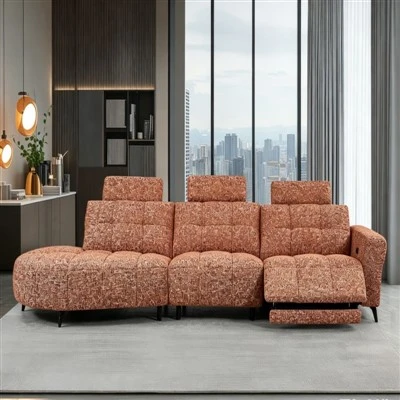
If you’re in the market for an electric recliner sofa and want to learn more about our mechanisms, their durability, or how to pick the right one for your space, feel free to reach out to our team for a procurement consultation. We can walk you through our testing process, share more details on our mechanism specs, and help you find the perfect recliner that fits your needs and your space.
Sectional Sofa References:
- "Furniture Reclining Mechanisms: Durability and Performance Standards," International Organization for Standardization (ISO), 2022.
- "Ergonomic Benefits of Power Reclining Mechanisms for Mobility-Impaired Users," Journal of Furniture Design and Research, Vol. 18, No. 2, 2021, pp. 45-58.
- "Consumer Reports: Power Recliner Reliability Study, 2023," Consumer Reports National Research Center, 2023.
- "Weight Capacity and Structural Integrity of Recliner Sofa Frames," American Society of Testing and Materials (ASTM) Standard F2017-18, 2018.
Huizhou Ramson Technology Co., Ltd.
Huizhou Ramson Technology Co., Ltd. is one of the most professional electric recliner sofa manufacturers and suppliers in China, also supports customized service with low price. Please feel free to wholesale bulk classy electric recliner sofa from our factory. Contact us for pricelist.
Address: Building 3-4, Changlonggang Industrial Park, Tiantou Village, Shatian Town, Huiyang District, Huizhou City, Guangdong Province
E-mail: jscsofa@jsc-furniture.com
WebSite: https://www.jsc-sofa.com/
