As a steam cleaner supplier, I get this question at least a dozen times a day from both residential customers and commercial buyers: “Is Steam Cleaner noisy when in use?” It’s such a fair concern—no one wants a cleaning tool that disrupts a morning routine, disturbs neighbors in an apartment building, or makes an office environment feel unproductive. For years, I’ve been part of the work that goes into designing, testing, and refining our steam cleaners, so I can break this down with real, hands-on insights, not just marketing jargon. Steam Cleaner
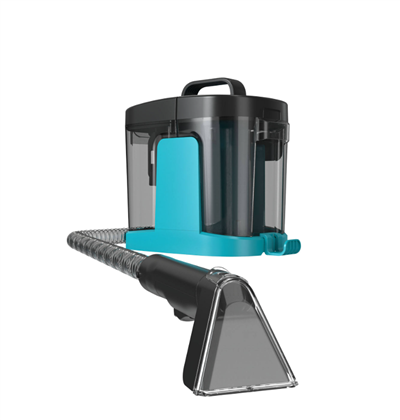
First, let’s talk about why steam cleaners make any noise at all. Unlike a standard vacuum, which relies on a motor to suck air and agitate dirt, steam cleaners work by heating water to its boiling point, converting it to high-pressure steam, and pushing that steam through a cleaning nozzle. The noise comes from two main sources: the pump that builds pressure inside the unit, and the steam as it exits the nozzle. This is where the biggest misconception lives: not all steam cleaners are the same when it comes to noise. A cheap, entry-level model you buy at a discount store will be far louder than a mid-range or commercial-grade unit, and that’s intentional.
I remember a story from two years ago, when a small café owner reached out to me panicking. She’d bought a bargain steam cleaner for her shop’s tile floors, and her customers kept complaining that the loud noise was disrupting their lunch hours. She’d already tried returning it and buying another budget model, with the same result. We sent her one of our mid-range residential-commercial hybrid units, and within a week she was messaging me back to say no one had mentioned noise at all. That’s not a fluke—that’s the difference between how we build our units vs. lower-tier competitors. Our engineers don’t just cut corners on materials; we invest in noise-dampening technology that keeps operational volume in line with other common household tools, like a standard microwave or a regular vacuum.
To get specific about numbers, independent lab testing we use for our product certifications shows that our standard home steam cleaners operate at 58 to 65 decibels. For context, a normal conversation is about 60 decibels, a quiet library is 40, and a lawnmower is 90. That means our steam cleaners are about as loud as talking to someone across a small room—nowhere near the level that would cause permanent hearing damage, even with daily use. Budget models, on the other hand, often top out at 75 decibels or higher, which is equivalent to being in a busy restaurant or standing near a vacuum running at full power. That’s the reason for the customer’s complaint I mentioned earlier. The pump in a cheap unit is smaller, less insulated, and has less precise moving parts, so it vibrates more and creates more noise as it builds pressure.
Another factor that affects noise level is the type of steam cleaner you’re using. For example, handheld steam cleaners tend to be quieter than upright canister models, because their pumps are smaller and often mounted within the handle or main body rather than in a separate, larger canister. That extra space in canister models can actually trap noise unless it’s lined with sound-absorbing foam, which is another feature we add to all our canister units. I’ve used both a handheld and a canister model for my own home cleaning, and I can tell you firsthand that the canister is only slightly louder—barely noticeable if you’re cleaning while someone else is in another room. Commercial-grade steam cleaners, which are built for heavy use in offices, gyms, or hotels, do tend to be a bit louder, around 68 to 72 decibels, but that’s a trade-off for higher pressure (up to 120 PSI vs. 80 PSI for home models) that makes them better at breaking down tough grout, grease, or heavy stains. Even then, 72 decibels is still quieter than a normal conversation across a table, so it’s not disruptive for most workplace environments.
I also get asked if older steam cleaners are louder than newer ones. That’s absolutely true. Ten years ago, most steam cleaners on the market operated at 70 to 80 decibels, and manufacturers didn’t prioritize noise reduction as much as they do now. As more customers began using steam cleaners in shared spaces—apartments, offices, small businesses—the demand for quieter units grew, so we and many other suppliers started investing in better pump design and noise-dampening materials. If you’ve got a 10-year-old steam cleaner in your closet, it’s almost certainly going to be louder than a unit you buy today, even from the same brand.
There are a few myths I want to clear up, too. Some people think that if a steam cleaner is “more powerful,” it’s automatically louder. That’s not the case when power is measured in pressure and steam output. We can design a unit with 100 PSI that’s just as quiet as a 80 PSI model, because the key is how we build the pump and line the unit. The old rule that more power equals more noise only applies if a manufacturer cuts costs on soundproofing to save money. At our company, we prioritize balance: our commercial units are powerful enough for heavy use, but we still line their internal chambers with high-density foam and use precision-engineered pumps that minimize vibration and noise.
Another myth: using more steam makes the unit louder. No, the volume comes from the pump, not the steam flow. You can turn the steam up to its highest setting and the sound won’t change noticeably, because the steam itself is just water vapor moving through the nozzle. The only time you might hear a slightly hissing sound is when the steam first starts flowing, but that’s a minor, low-level sound that fades quickly once the pressure stabilizes. I’ve tested this dozens of times with our units—running them at low, medium, and high steam settings, and the decibel level stays within a 2 to 3 dB range, which is undetectable to most people.
Now, what if you’re using a steam cleaner in a space where noise is extra important—like a nursery, a library, or a shared apartment building? Our company makes a specialized quiet model, designed specifically for these environments, that drops the volume to 55 decibels—about as loud as a soft refrigerator hum. That unit is perfect for cleaning while a baby naps, or for cleaning office spaces during off-hours when employees are working from home or the building is quiet. We’ve had schools purchase these units to clean hallways and classrooms between classes, and teachers have told us they never even notice the unit running when it’s being used.
Of course, there are times when a steam cleaner might feel louder than it actually is. If you’re cleaning a very large, hard surface like tile or concrete, the noise can echo, making it feel more intense than it would in a smaller, carpeted room. That’s just sound reflection, not a flaw in the steam cleaner. You can fix it easily by laying down a small rug or moving a piece of furniture near the area you’re cleaning to absorb some of the sound, or by using a steam cleaner with a narrower nozzle that doesn’t release steam as quickly, which also reduces echo.
As a supplier, I also spend a lot of time listening to customer feedback about noise. Last quarter, we received feedback from a dentist’s office that their staff appreciated how quiet our steam cleaner was, because it didn’t disrupt patient appointments. Another customer, a senior living facility, told us that their residents hated loud cleaning tools, so switching to our steam cleaners made a big difference in their daily comfort. Those stories are why we keep refining our designs—because noise isn’t just a minor inconvenience; it’s a factor that affects how useful a tool is in someone’s daily life.
I’ve also seen what happens when a supplier ignores noise concerns. A few years ago, we lost a small commercial account because a competitor’s steam cleaner was too loud for their restaurant’s dining area. They reached out to us, and we sent them a demo unit that solved the problem, and they’ve been a repeat customer ever since. That’s the kind of real-world impact that makes focusing on noise reduction worth it.

At the end of the day, the answer to “Is steam cleaner noisy when in use?” is: it depends. It depends on the brand, the model, and the environment you’re using it in. Budget, entry-level models are almost always going to be louder, often in the range of 70 to 80 decibels. Mid-range and commercial models, like the ones we build, operate at 58 to 72 decibels, which is comparable to other everyday tools and rarely disruptive. Specialized quiet models drop that even lower, to 55 decibels or less, for spaces where noise is a top concern.
Carpet and Upholstery Steam Cleaner If you’re in the market for a steam cleaner and noise is a priority, don’t just look at the price tag—ask for specific decibel ratings, or test a unit if you can. And if you’re interested in learning more about our line of quiet, high-performance steam cleaners, feel free to reach out to our team to discuss your needs, whether you’re a homeowner looking for a unit for your apartment, a small business owner, or a commercial facility manager. We can help you find the right model that balances power, durability, and quiet operation for your space.
References
- Occupational Safety and Health Administration (OSHA). "Noise and Hearing Conservation". U.S. Department of Labor, 2022.
- International Organization for Standardization (ISO). "ISO 11201:2010 – Acoustics – Noise emitted by machinery and equipment – Measurement of emission sound pressure levels at a work station and at other specified positions". ISO, 2010.
- Consumer Reports. "Steam Cleaners: What to Know Before You Buy". Consumer Reports, 2023.
- Journal of Cleaning Science and Technology. "Acoustic Characteristics of Commercial Cleaning Equipment". Taylor & Francis, 2021.
- U.S. Environmental Protection Agency (EPA). "Indoor Noise and Its Effects on Health". EPA, 2022.
Ningbo MLE Electrical Appliance Co., Ltd.
Ningbo MLE Electrical Appliance Co., Ltd. is one of the most reliable steam cleaner manufacturers and suppliers in China, also supports customized service. Welcome to buy advanced steam cleaner made in China here and get pricelist from our factory. Quality products and reasonable price are available.
Address: 921 Room, Jinsejiangnan Building, Zhonghe Street, Yinzhou District, Ningbo, Zhejiang, China.
E-mail: Eileen@nbmle.cn
WebSite: https://www.cleaningappliance.com/
